14 April 2020

Oct 2019 

and 

April 2020


Social isolation.
Isn't it boring?
Better than the alternative though innit?

Every day I go out for my 'exercise'. For me that's a walk around the north side of the pond, onto the canal towpath , round the rugby field and back. If I remember to set my tracker ap it usually runs at about a mile and a half.
I like to walk and usually cover more distance. Here's an eight mile stroll from earlier in March - before lockdown:


From now on I'm just going to randomly select pictures from the past few months alternating with the day's pics.
For starters, from October the first last year:

Not a spider; it's a harvestman

Dock bugs.
I thought that these were shield bugs but it seems not.

Second of October

Here's our muscovy, I didn't notice the foreground fish until I began to edit the picture.
Heron passing overhead.
There's often a heron sitting on the bank of the pond or hanging about in the rugby field.
Robin departing.


On the bank of the pond


Dunno if this vid will work, if not I'll try summat different next time.
It's a nocturnal visitor: a hedgehog.


Waxing Moon


October the fourth


Harvestmen (should that be harvestmans?) are quite common. Until seeing them here I'd never considered them to be anything but a weird kind of spider.


Dock bugs, which I'd thought to be shield bugs or (US) stink bugs, aren't although they look very like 'em.
There's a small patch of ground that is home to a quantity of dock bugs. I've seen up to a dozen or so at one time.


An escapee from a John street garden, a large buddleja bush is a magnet for insects. This year (2019) there were few butterflies but here's a bee's bum.


Swan.


13th April 2020


Back garden bluetit.
I've several hanging fatball feeders and I scatter seed around i the (weed covered) ground. As a result I've lots of sparrows - two dozen at a time sometimes - a few starlings - specialising in skwawking and fighting - the odd bluetit, robin and blackbird and occasional wood pigeon and collared dove.


We've a pair of great crested grebe on the pond. They've built a 'nest', although it seems a tad generous to call the clump of floating reeds that.

Buddleja can look quite spectacular when it goes to seed.


Mama mallard now has only four chicks.


That's all for now. More in a couple of days.
I post more pics on Twitter most days.

13 April 2020

April 12

Sunday twelfth of April

April’s birth flowers are the daisy and sweet pea. The birthstone for April is the diamond which symbolizes innocence. 
April was originally the second month of the year in early versions of the Roman calendar and consisted of 30 days. It became the fourth month consisting of only 29 days when January was designated the first month of the year around 450 BCE. 
The month became 30 days long again when Julius Caesar reformed the calendar.
Old English - April or Aprilis 
Latin name - Aprilis or Aperit - to open 
Greek - Aphro - short for Aphrodite

April is the birth month of my oldest friend - for slightly less than a month she's two years younger than me - in May she'll revert to being three years younger.

Saw him in January when he was the only original member of I'm Sorry I Haven't A Clue in the show at Sheffield City Hall (to be broadcast next month I believe).
ISIHAC is, I believe, the best thing left of the Python era - all episodes can be found here. It's possibly not for general consumption, being: 
a) very British, 
b) from time to time rather topical so if you weren't around then it might be obscure, 
c) rather 'in crowdy' in that you need to have listened to a good few shows to realise what the joke is.
Much of the attraction of ISIHAC is in the repetition of jokes and 'rounds' from over forty years of programmes.
The first episode of ISIHAC was in 1972 and it's still going, how it will cope with Tim's death is a mystery - it might fold.


My first daily view of the pond - fifty feet from my front door.

Anyhow; on with today's pics:


The back of a muscovy duck.
Muscovy ducks are native to central and south America. They can be crossed with most domestic ducks, which are usually mallard derived, to produce mostly sterile offspring. This is usually done to create meat birds with better growth rates and leaner meat than normal domesticated ducks.
This one apparently flew off from a farm at Shireoaks.


There are more geese on the pond than I have known heretofore. There's a couple of canadas and several of these greylags.
(this pic is intentionally out of focus - it's 'arty')


Wasn't sure what this bird was at first - thought it was a dunnock but the beak looked a little too fat. numerous twitterati have assured me that it is a dunnock.


The pen is still on the nest so it would seem that she's incubating.


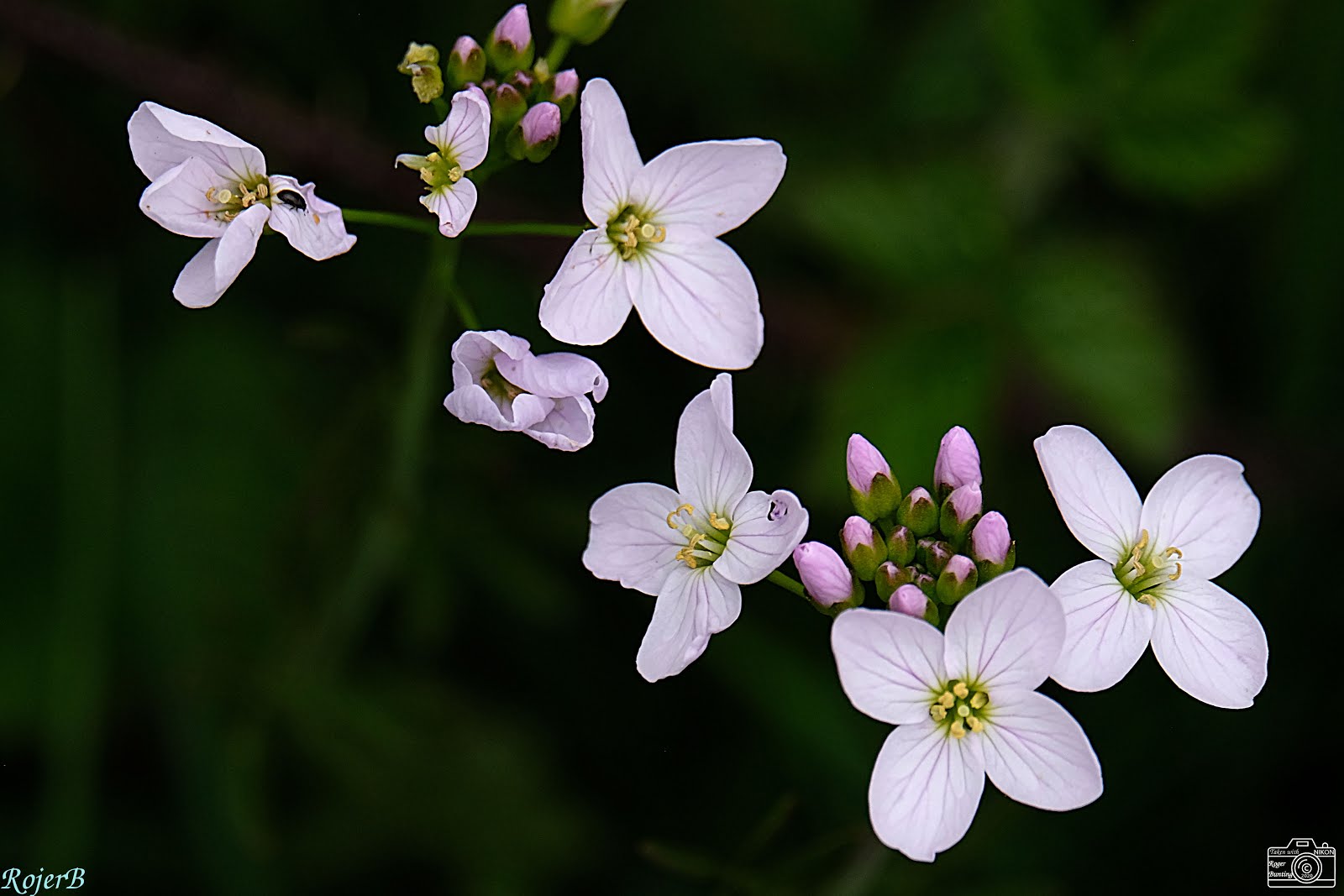
Cardamine pratensis
Cuckoo flower or lady's smock flourishes in the grass around the rugby field. Its delicate white, pink or light violet flowers stand out against the surrounding greenery. Caterpillars of the orange tip and green veined white butterflies feed on the leaves.


There's a large cherry tree in the corner of the rugby field. At the moment it's covered with blossom. There are butterflies and bees scattered throughout its branches. Sadly the cherries aren't edible, being small and sour - I've tried 'em.


Alder leaf beetles
Alder beetles were considered extinct in the UK as there were no recorded sightings between 1946 and 2003. Round here they're now as common as muck, every alder tree has its population of beetles, many of which will be making more alder beetles like this pair.


I've never noticed as many peacock butterflies around as this year. 
This couple were playing 'chase me' for at least ten minutes without ever mating, at least as far as I could tell.


Willow catkins are photogenic


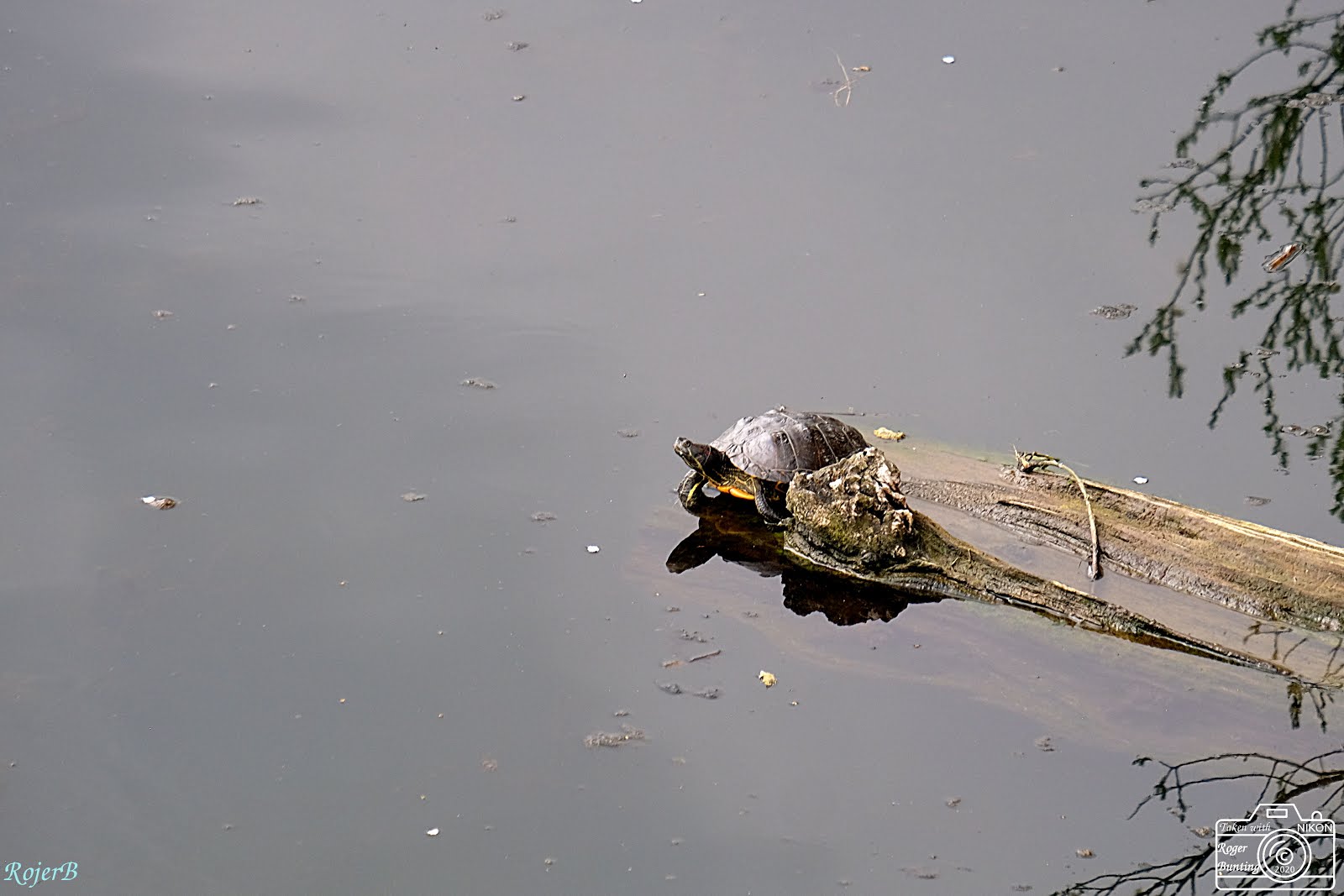
There's a couple of terrapins on the pond. They like to bask in the sun, here's one of 'em today (12th) ...

... and here's both of them yesterday.


Godfrey's Pond
or as it's apparently to be known now 
Sandhill Lake.
I'm told that 'Godfrey' was the owner of the lake who resolutely chased off unauthorised anglers. I've heard that there was a butcher's about where my flat is where maggots were bred for sale to anglers.
The pond was originally a sand quarry, there are traces of a wharf on the canal but no-one seems to know anything about it.


10 April 2020

Continuing Jan

Sunday the fifth of January

Can't recall why, but the only pic I've got from this day is of the Moon which was waxing at 74% illuminated.


Monday the sixth of January


Blossom is showing around the pond now. 
This is blackthorn, the blossom usually comes well before the leaf shoots whereas hawthorn greens up before or at the same time as it blossoms.


Flowering cherry also flowers before it leafs.


One of my favourite pond views.
Image is seven pics melded together. A procedure I'm rather boringly fond of.


This is tenaciously growing in the mortar of a retaining wall.
It will have small pink flowers later in the year


Willow trees have some rather strange growths.


Eighty-three percent lit Moon.


Tuesday the seventh of January


There are dozens of silver birch on the North side of the Pond, here's one of them.


Ivy leaves are often the main greenery around from November to January.
The plants provide shelter and food for many birds, small mammals and insects.
Why are the eight 'Ivy League' universities in the US so called?


We have a muscovy duck. From a distance its plumage looks mostly black but with closer inspection shows a myriad of blues, purples and turqoises.


This is pen and cob looking as if butter wouldn't melt. 
Their beauty belies their seeming hatred of the other swans who rarely get a chance to enter the water.


Wednesday the Eighth of January

Another pano shot

09 April 2020

2 to 4 Jan 2020

Second of January

Tufties on the pond.
A few years ago there were very few, if any, tufted ducks on the pond, then a few started to overwinter. Now they're outnumbering the mallards.


Lichen has for a long time been a fascination of mine. This 'blob' has moss growing in and around it - or is it growing in and around the moss. I keep reminding myself to do a little bit of reading and educate myself about lichens, fungi, and other denizens of the undergrowth but idleness takes over.


This bullfinch was between pond and canal just above Morse Lock.
I don't see 'em very often.

Third of Jan

Up above the North side of the pond someone's taken to hanging nets of peanuts and coconut halves full of birdy goodies in the willows. I've joined in.  There's blue and great tits feeding most times, often together.
I subsequently found out who that was - more later.


Saturday the Fourth of Jan


A few of the zillions of blackthorn on the North of the pond are blooming early - very early - remember these pics were taken at the beginning of January.

Lichen will grow (almost) anywhere here it's on the plastic connectors of a wire fence.

I've been playing with shutter speed a bit; here's Stret Lock (above) and Deep Lock (below) bywashes in spate at fast and slow speeds


The lock gate paddles are raised and lowered using windlasses on rather splendid mechanisms mounted on the gates. At the 'upstream' end of the lock they're somewhat different.


The view from Morse Lock's bridge over to Saint Anne's Church across fields and houses.


Ivy fruits provide food for birds and small mammals throughout winter months.


Whenever there's a decent Moon I try to get a picture of it


That's a few more days done, I hope to speed up from now but it's taken me a while to get into making the pics and words look how I want 'em to. Publishing at Midnight Wed/Thur

05 April 2020

Pics

From January 2020

 We've got a Muscovy duck on the pond.
It's been here since about last August or September. Apparently it and its mate departed a farm in Shireoaks (a village to the west of Worksop) and the female stopped on the canal at Wood End about half way between its home and here.
(The Muscovy duck [Cairina moschata] is a large duck native to Mexico and Central & South America [wiki])
The pond from the North